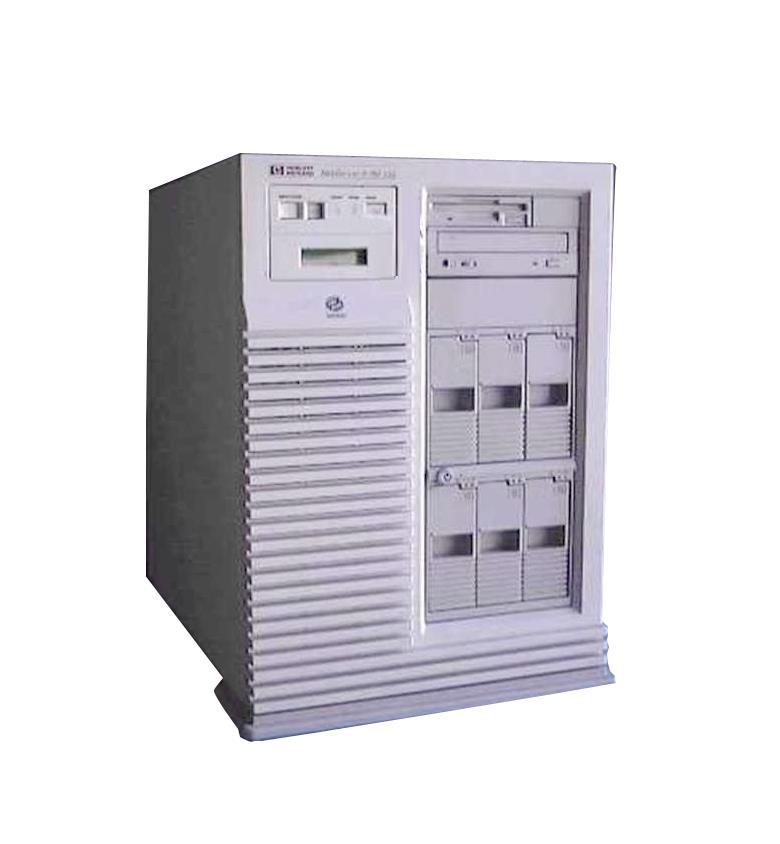
There are many ways to define "the best server in the world." Some examples are performance, redundancy, security, price, features, uptime, running costs, reliability, fancy terms such as MTBF, HA, IOPS and others.
But sometimes, reality tells a better story than any of the most sophisticated metrics ever can.
Many years ago, I worked for a company that had a rather unusual IT problem:
They had a server — but no one knew where it was. It showed up on the network as a file and print server running Novell NetWare. So you could store files on it, you could print through to all the networked laser printers that were dotted all over the place, and everyone did.
Functionally, everything worked. Physically? It had vanished.
After some investigation, we finally located it.
Not in a server room or in an office; not even inside a proper building environment.
It was sitting on the factory floor, right next to the loading ramp where lorries came and went all day to deliver supplies. Forklifts buzzed past it. Diesel fumes filled the air. Rain and snow drifted in through the open bay.
It was concealed in a wooden box with doors. And on top, a yellow flashing alarm light.
"That's the overheating alarm," the factory manager explained proudly. "A standard forklift warning light which we repurposed. When it starts blinking, we open the doors to let the excess heat vent out. And when it rains or snows, we close the doors to protect the little guy from the worst elements."
He introduced himself as Ian. (Although I suspect everyone called him Dave.)
He then told me the server's story.
When the machine first arrived — an HP NetServer LH II — it was placed in the accounting department.
That didn't last long because it made a constant humming noise, which apparently interfered with the accountants' ability to enjoy a quiet afternoon nap.
So it was moved to the boardroom. That didn't last either because the grey industrial Bauhaus chassis clashed rather dramatically with the mahogany interior.
The board considered building a proper server room and decided against it. Every square metre of space was needed for manufacturing and it seemed excessive to build a server room for just one server.
So the server was relocated to the only place where no one objected: the loading bay. At first, it just sat there. Exposed to the elements, humming and working away and blinking its little disk activity lights occasionally — and sometimes all six of them. It was working, always working, blinking and humming away.
One day a forklift bumped into it and dented the metal case and scratched the grey paint to reveal more grey metal underneath — but the little guy kept working away as if nothing had happened. The factory workers grew fond of it. There was something oddly admirable about this high-tech machine enduring dust, fumes, heat, cold, and moisture day after day without complaint.
Eventually, they decided to improve its living conditions. They built a wooden enclosure around it. That solved the rain problem but also created a new one: heat. So they added doors and a repurposed forklift flashing alarm light triggered by a thermostat. When the heat alarm light started flashing, someone would open the doors to let the server cool down.
Over time, the server developed something like its own ecosystem. When I finally opened it out of curiosity, I found: a family of mice, spiders and webs, various insects; and in spring, even frogs — thanks to a shallow puddle of standing water inside the chassis bottom.
The internal components were barely visible under a thick, grey, greasy layer of dust and residue. It looked less like a computer and more like an archaeological site.
And yet it still worked flawlessly.
Eventually, the server was retired and replaced with a newer, cheaper system hosted remotely over a "modern" wide area network — the precursor to modern cloud computing.
Which, incidentally, failed quite regularly.
What I learned from this is what the term "greatest server" truly means. The best server in the world is the one that kept working under the worst conditions it was never even designed for — and was truly appreciated for it.