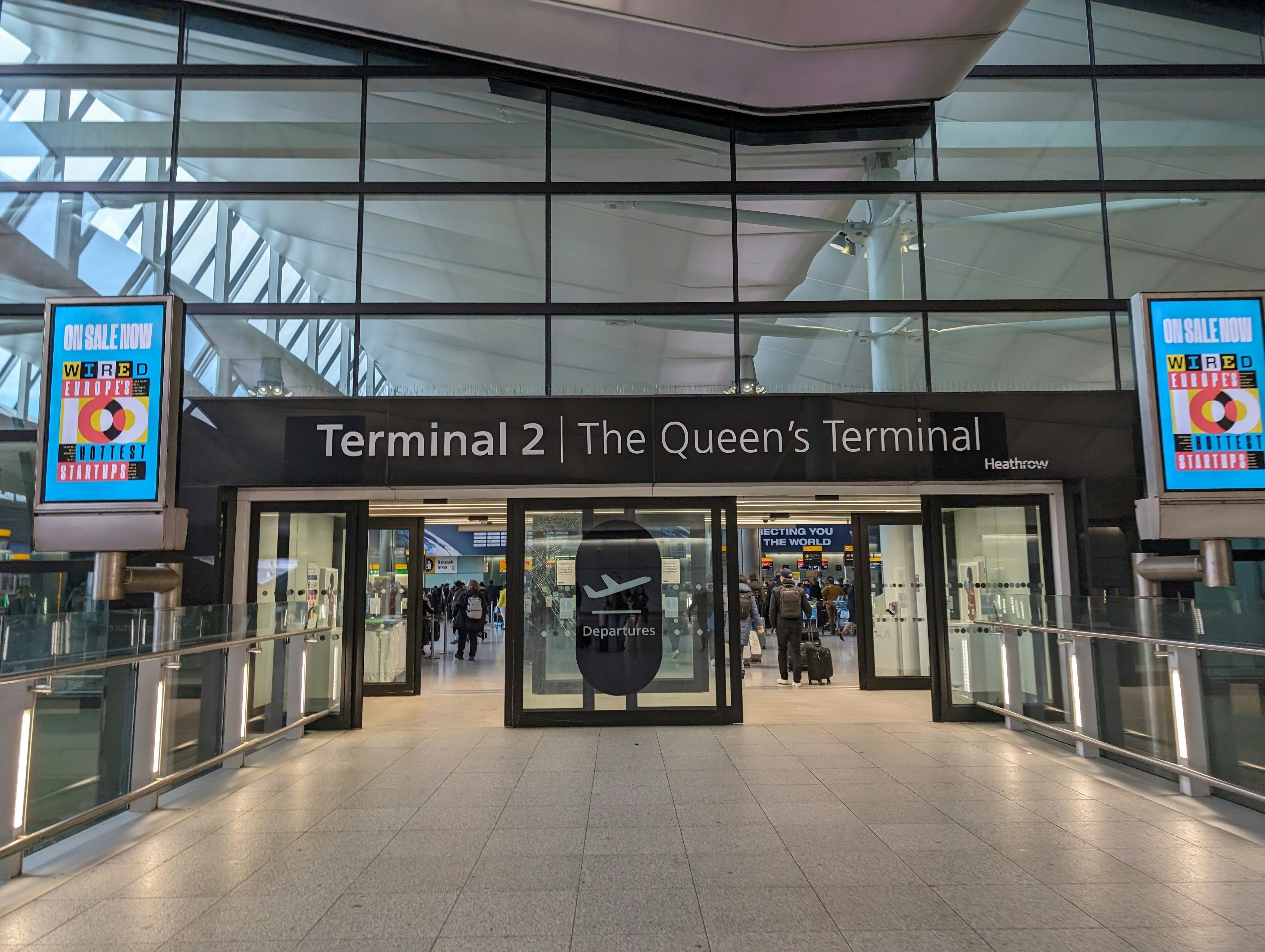
Every career has a hinge point. A moment where one chapter closes and another opens, and where the circumstances are just unlikely enough that you later wonder how it nearly didn't happen.
Mine arrived on a Friday, delivered by a man who just came from the hotel tennis court and who was cramming in a last interview before his flight back to Munich later that evening.
The Interview That Almost Didn't Happen
He had been interviewing candidates for a whole week but none of the candidates had satisfied him and so he called the agency and ask to see a wildcard candidate on short notice because the "good matches" were not so good afterall and he had wasted an entire week of his time with no result. I got a call by the agency and they explained the situation to me and asked me if I could go for the interview on very short notice even if chances were slim. I jumped at the chance into the car and off to Heathrow and I made it just in time.
The interview was short. He was direct in the way that people are when they have a plane to catch and nothing left to lose. He asked good questions. I answered them honestly. At some point it became clear that whatever the other candidates had offered, I was offering something different, not more impressive, but different.
At some point he said something like at least you can speak german and seem to know what you are talking about when it comes to tech. Indeed I had hands-on technical depth across both the platforms his UK operation was running. And I was, if nothing else, present and willing. He thanked me for my time and excused that fact that he had to keep the interview brief because he had to catch a flight now. He would be in touch through the agency. Good bye.
What He Told Me Afterwards
Next week on Monday he called me to offer the job, he did not dress it up.
He told me plainly that I had been the weakest candidate by conventional measures. I had no demonstrable management experience. I had not run a team. I had not owned a budget or navigated the politics of a corporate leadership group. On paper, I was not what the role required.
But he had decided he could work with what I had. The technical competence was real and it was a rare combination of UNIX and Windows both, at depth, at a time when most engineers had committed to one world or the other. He could help me develop the management skills. He could position me as a hands-on technical manager, which was, he had concluded, closer to what the situation actually needed than a polished manager with shallow technical foundations.
He had turned around all major European subsidiaries. He knew what a broken IT operation required. And he was prepared to make the bet.
But he wanted me to understand exactly what I was walking into.
"Do not accept this role too easily, I warn you. There is chaos, and we want confidence. It will not be easy. You are not the first person I have hired for this who failed.
What is strange is that the IT-operation does not NOT work. As a matter of fact, the IT-Ops overall does work. But nobody knows how or why. There is chaos and opaqness when what we need is fewer surprises and more predictability. We need a return on our IT investments that is steady and proven. We need to restore confidence in the IT operations relaibility and we need to be able to move forward to modernise, to make the entire organisation slick and lean and remove risk.
We need budgets that are realistic. Forecasts that hold true. Clarity.
You are the maybe the man to deliver that. But go in with your eyes open."
The Company
The role I landed (by sheer luck it seemed) was IT Manager at the UK subsidiary of one of the most significant materials handling companies in the world.
The parent was a US-based manufacturer with a turnover of around $2 billion at the time, the largest family-owned materials handling company in the world. It had expanded steadily into Europe, building a network of subsidiaries across the continent, each one expected to operate to the standards the parent had established over decades of disciplined growth. They were in it for the long run and they were challenging the european competition on their home turf.
The UK operation was a serious business in its own right: around 400 employees, two manufacturing facilities, a central service centre, and regional offices serving customers across the north and south of the country. Forklift trucks and materials handling solutions at scale the kind of operation where downtime in a factory or a missed delivery to a customer site had immediate, measurable consequences.
The European IT function was run from Munich. The IT Director responsible for it was German, meticulous, impatient results focused. He had spent the better part of several years bringing the continental subsidiaries into order Spain, Ireland, Germany. Each had started out in a state of varying dysfunction. Each had been sorted out. The UK was the last one on the list, and by some margin the most stubborn.
He had been spending far too much time in the UK. His definition of success was simple: fix it well enough that he never had to come back.
What the Logistics Years Had Built
By the mid-1990s, I had spent several years inside one of the more demanding IT environments I could have hoped to land in as a young engineer.
The parcel logistics company had been, in retrospect, an extraordinary education. Not because the technology was sophisticated much of it was improvised, fragile, and held together by scripts and ingenuity but because the problems were real and the consequences of getting them wrong were immediate. Drivers waiting for waybills. Parcels disappearing. Sites going dark. In that environment you learned quickly, or you learned to find a different job.
What I had built across those years was a particular kind of technical depth. I was fluent in both UNIX and Windows at a level that most engineers had in only one. I understood how to design data pipelines under constraint. I had built systems that caught criminals and systems that kept thirteen sites synchronised across connections that were barely wider than a thread. I had learned that the interesting problems were never where they first appeared, and that the answer was almost always already hiding somewhere in the data.
What I had not built (and this is important) was any real experience of management. I had managed systems, problems and continous HW/SW upgrades. But I had not managed people, budgets, relationships with senior leadership, or the particular art of turning organisational chaos into something resembling order.
I did not know that this gap was about to become the central fact of my professional life and the critical door opener for the future. I was realising that this career move might just be a very short one. I felt like a fish out of water because I was.
I accepted anyway.